How it All Began
The oldest chemical evidence of an alcoholic beverage dates back to about 7000 BC inside pottery jars excavated at Jiahu, an early Neolithic village in the Yellow River Valley, Henan province, China. The residues could be identified as alcoholic beverages as they contained chemical compounds characteristic of some fruits and of the wines made from them. Specifically, the compounds were tartaric acid (from grape and hawthorn tree fruit), very specific beeswax compounds (from honey) and phytosterol ferulate esters (from rice). This indicated that the liquid inside the vessels was a mixture of rice beer, honey mead and hawthorn and/or grape wine.
The findings indicate that fermented beverages were already being made about 9,000 years ago.
Arguably, the art of distilling was founded in ancient Mesopotamia[ (the modern day equivalent is an area covering parts of Iraq and Syria) around 2000BC, often used as a way to produce perfumes and aromatics.
There was a written record of distilling discovered dating to around 100AD. The Ancient Greek philosopher Aphrodisiasthe invented a process of taking sea water and distilling it into pure drinking water.
Medieval civilizations evolved their techniques over the following centuries, although still not resulting in alcohol. Knowledge of distillation spread to Europe along with the Nomadic Moors of the early first millennia. The process is picked up by those in the Christian religion, using it to produce ingredients for various ceremonies, and also medicines for colic, palsy and smallpox.
The first alcoholic beverage to obtain widespread popularity in what is now Greece was mead, a fermented beverage made from honey and water.
The Birthplace of Scotch Whisky
It is widely acknowledged as the birthplace of ‘ Uisge Beatha or Aqua Vitae – “Water of Life” and can be traced back to 1494 where an entry in the ‘Exchequer Rolls’ refers to a documented fact in a Royal commission that King James IV ordered aqua vitae from the abbey. The original wording was: “To Friar John Cor, by order of the King, VIII bolls of barley, wherewith to make aqua-vitae”.
A ‘boll’ is an old Scottish unit and varied a lot during the time. (it could be used to count bushels of wheat)
The ruins of Lindores Abbey lie on the outskirts of the small town called Newburgh and very close to the river Tay., north of Edinburgh.
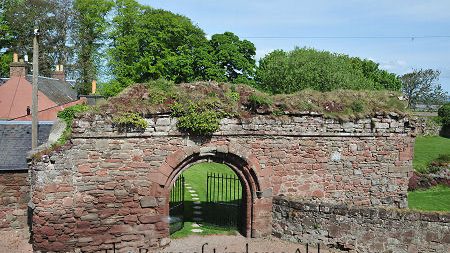
Between 1536 and 1541, King Henry VIII of England dissolved the monasteries, sending their monks out into the general public. Whisky production moved out of a monastic setting and into personal homes and farms as newly independent monks needed to find a way to earn money for themselves.
The increasing popularity of Scotch attracted the attention of the Scottish Parliament, looking to profit from the fledgling industry. The first taxes on Scotch were introduced in 1644 which led to an increase in illicit whisky distilling across Scotland.
Following the outbreak of civil war in England in 1642 the Scottish Parliament imposed a series of excise levies. So began the age-old conflict between Customs & Excise (the Gaugers) and distillers, who were increasingly driven to hide in the hills and glens and the isles of the Inner Hebrides to carry on what they regarded as their legitimate trade, free from punitive government taxes. However, not all distilling was illicit. Following the restoration of the monarchy in 1660, the tax on ale, beer and whiskey (which was still referred to as aqua vitae in all statutes of the period) was essentially doubled,
Smuggling became standard practice for the next 150 years. The excisemen, or gaugers, as they were known, and the illicit distillers began a game of cat and mouse, with canny Scots coming up with increasingly ingenious ways of shielding the spirit from taxation. Even usually honest members of the clergy would hide Scotch under the pulpit, and the illicit spirit was even transported by coffin to avoid the taxman!
After the Treaty of Union with England in 1707, the first London-based Parliament of the now United Kingdom of Great Britain and Ireland decreed that Scotland should pay the same high rates of duty as England. This was in direct contradiction to the Treaty of Union, which led to the infamous Malt Tax riots of 1725. The government backed off from such universal revolt, and it took nearly another 100 years before excise duties were harmonized throughout the United Kingdom. Nevertheless, legitimate distilling continued to develop, particularly in the Lowlands of Scotland. By 1756 duty was paid on 433,811 gallons of spirit, nearly eight times the volume taxed the year after the Treaty of Union.
Following the Malt Tax riots, duty in Scotland was still only half the rate applied to English (particularly gin) distillers and so Scottish traders could afford the additional transport costs and still make good margins on their product to the disadvantage of their English counterparts.
By the 1820s, as many as 14,000 illicit stills were being confiscated every year, and more than half the whisky consumed in Scotland was being enjoyed without the taxman taking his cut.
The continued flouting of the law eventually prompted the Duke of Gordon, on whose extensive lands some of the finest illicit whisky in Scotland was being produced, to propose in the House of Lords that the Government should make it profitable to produce whisky legally.
In 1823 the Excise Act was passed, which sanctioned the distilling of whisky in return for a licence fee of £10, and a set payment per gallon of proof spirit.
Smuggling died out almost completely over the next decade and, in fact, a great many of the present-day distilleries stand on sites used by the smugglers over two centuries ago.
In 1831, Aeneas Coffey invented the Patent Still which enabled a continuous process of distillation to take place.
This led to the production of Grain Whisky, a different, less intense spirit than Malt Whisky. The lighter flavoured Grain Whisky, when blended with the more potent and fiery malts, extended the appeal of Scotch Whisky to a considerably wider market.
In the 1880s, the phylloxera beetle devastated French vineyards, and within a few years, wine and brandy had virtually disappeared from cellars everywhere.
Once again the Scots were quick to take advantage. By the time the French industry recovered, Scotch Whisky had replaced brandy as the preferred spirit of choice.
Types of Scotch Whisky
There are four different styles of Scotch whisky: malt whisky (also known as single malt), grain whisky and blended whisky.
Single Malt
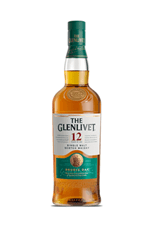
Single Malt whisky is made using malted barley, water and yeast. The liquid is distilled in copper ‘pot-stills ‘ and matured in whisky barrels for a minimum of three years (though most is matured for much longer than this). Single malt whisky is produced at one distillery while blended malt whisky is the product of two or more distilleries.
Blended Malts
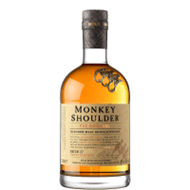
A blended malt is essentially a blend of single malt whiskies. No grain whisky can be added. Blended malts are sometimes referred to as ‘’pure malt ‘though the term has generated much controversy for it is deemed to be misleading.
NB: The rules were recently changed and pure malts, by law, must now be referred to as “Blended Malt”
Grain Whisky
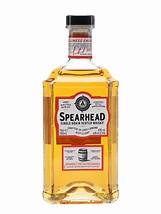
Grain whisky is made differently. This time malted barley is mixed with unmalted barley and other cereals (such as maize and wheat) before the whole mixture is combined with water and then yeast. The resulting liquid is distilled in a tall patent still (or Coffey still) which looks very different to the traditional pot still and yields more spirit at a much higher strength. [Spearhead (image] is produced at the Loch Lomond Distillery
Blended Whisky
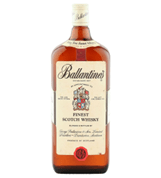
Blended whisky involves an intricate process of mixing different single malts with grain whisky. It’s a complex process, whiskies from different distilleries have their own characters which is why the art of blending is so skilled and recipes are a closely guarded secret. By using a blend of malt and grain whisky it helps to keep the prices lower than that of Single Malt whisky.
 welcome to the art of whisky