Maturation & Ageing
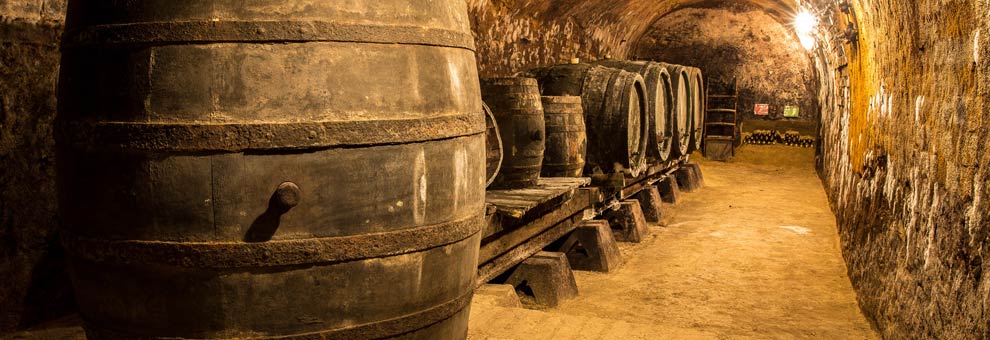
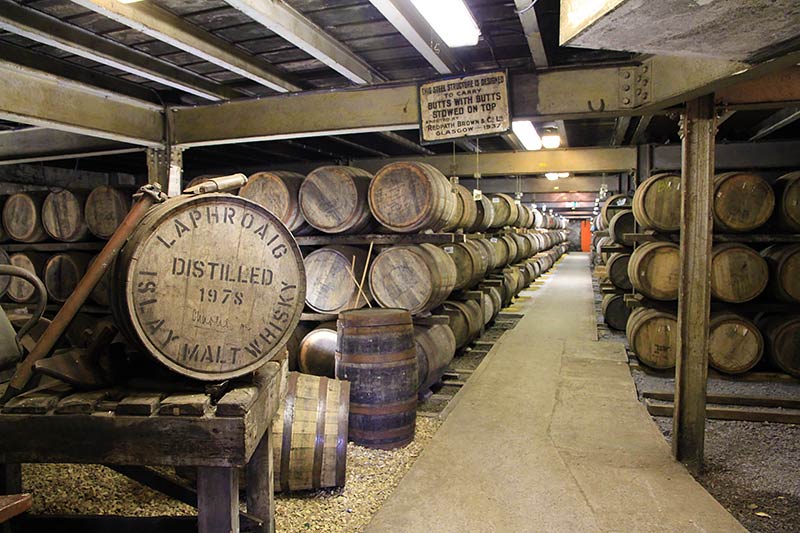
Once the spirit has been produced in the spirit still, it is directed via the spirit safe to one or more spirit receivers. It is then placed in casks for maturation in bonded warehouses for a minimum of three years inside a Scottish bonded warehouse to legally be called Scotch.
The cask filling is not the most glamorous stage in whisky production, but it is one that takes place at every distillery you are likely to visit. Casks are manoeuvred by hand to an area below the raised spirit receiver (or vat). The spirit is then fed via pipes into the cask. When full, a bung is fitted in place and the cask moved off to the warehouse to begin the slow process of becoming Scotch whisky.
Malt whisky is aged in casks which can be used more than once.
A cask used for the first time is referred to as a first fill, which could for example mean a 12 year aging period, before the cask is emptied and filled with new make spirit for a second time, when it’s referred to as a second fill. Casks may be filled a third or even fourth time. Each fill has a different influence on the flavour of the resulting malt whisky, which means the fill is a significant factor.
Casks have previously been used to age either bourbon or sherry, with each type of cask contributing a different range of flavours to the maturing malt whisky. Bourbon barrels add, for example, vanilla and a light sweetness, while sherry casks lend richer sweetness with a range of fruit cake and dried fruit notes.
Each time a cask is filled the influence of the oak on the maturing malt whisky is reduced.
Scotch Malt whiskies have to be matured in oak casks for a legal minimum of 3 years before they can be called ’whisky’ but some are matured for 50 years or more, so casks need to be of the best quality and reliable.
The properties of the wood itself has a part in contributing towards the flavours of the whisky.
Tannins, Lignin’s and cellulose impart vanilla and caramel notes.
In warmer weather the wood expands leading to an increase in the interaction between the wood and the liquid – there is also a higher level of evaporation known as ‘The Angels Share’. whereas Cold weather has the opposite effect, contracting the wood, causing a change in the interaction between the wood and the liquid. These two different interactions with the weather patterns are known as ‘cycles’.
The air outside the cask is also absorbed into the wood and liquid creating ‘fruity flavours’.
Bottling – The Final Leg
At this stage, the whisky is ‘cut’ with purified water to bring down the strength and produce a unified product. Most ‘cask strength’ whiskies are cut to 60% alc/vol. and then further cut to 40% alc/vol to be bottled and sold.
40%alc/vol is the legal minimum whisky can be sold.
Chill-Filtering Process
The process of chill filtering is where substances in the whisky are removed before bottling. The main reason to chill filter a whisky is actually purely cosmetic. A non filtered whisky that is 46% ABV or lower will go cloudy when water or ice is added and when the whisky is cooled.
It occurs before bottling and consists, as the name suggests, of chilling the whisky down to zero degrees Celsius in the case of single malts and -4 degrees in the case of blends. The temperature for blends is lower as they contain grain whiskey and these have a lower natural concentration of the fatty acids.
What is this haze? flocculation here or, as its friends know it, ‘floc’.(affectionately known as ‘The Scotch Mist’ What you’re seeing are ethyl esters of long-chain fatty acids, and larger alkyl esters – formed during the making of the whisky. The liquid and the clumps are then pumped under pressure through a pipe into a chamber where it is passed through a series of strainers and absorption filters.
The haze doesn’t pose any hazards to those who drink it
Why do this in the first place? Well, if you bottle your whisky at less than 46% abv – and the vast majority of Scotch falls into this category – then it will typically form a ‘haze’ at low temperatures, or following the addition of water or ice. This technique often corrupts the spirit as some of the compounds that make for a well-rounded whiskyare filtered out of the final spirit.
Some distilleries purposely don’t chill-filter to produce a whisky that is more natural.

 welcome to the art of whisky