The Whisky Regions of Scotland
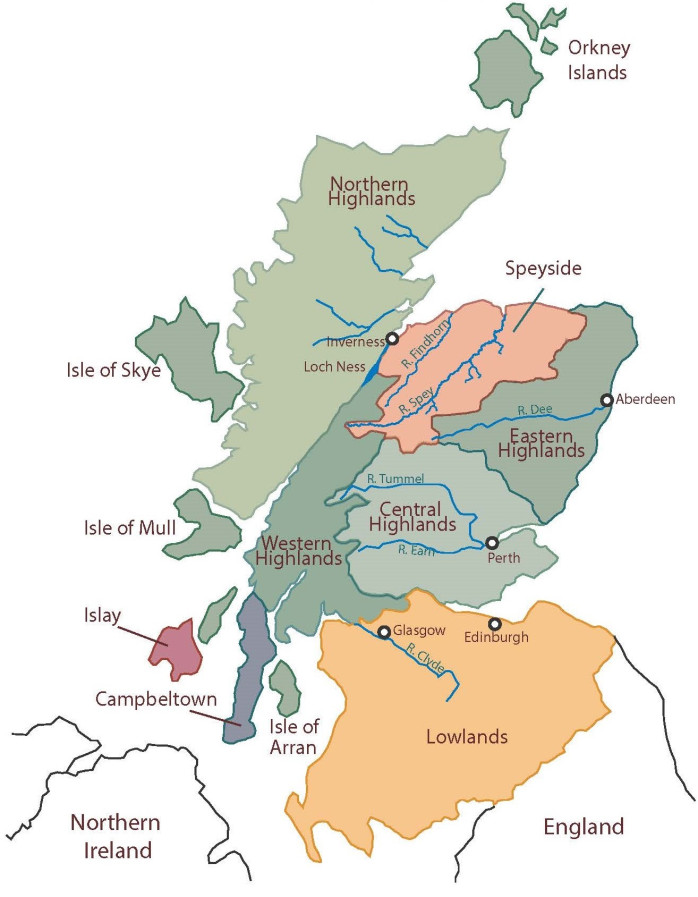
There are six whisky regions: Highlands, Speyside, Lowland, Campbeltown, Islands and Islay.
Islay, as a Hebridean island, is sometimes considered part of the Islands region, but its flavour characteristics are so distinctive that it makes sense to call it a sixth region.
Highland

The Highlands is Scotland’s largest whisky-producing area, covering anywhere from the north of Glasgow, the Clyde estuary is the west to the River Tay in the east up to Thurso in the north.
Due to this large area, whisky in the Highlands is diverse and offers vastly different flavours. It’s easier to split the Highlands into four subregions, north, east, south and west. Each of these subregions has its own style.
In the north, you’ll find full-bodied single malts, sweet & rich in character. Lighter, fruity whiskies are more commonly found in the east. Similar drams are located in the South, these would typically have a touch less body,
The Western Highlands offers the full bodied peaty style. Due to the size of the Highland area, these distilleries make up 25% of all Whisky produced in Scotland.
| Aberfeldy | Arbikie | Ardmore |
| Ardnamurchin | Ardross | Balblair |
| Ben Nevis | Blair Atholl | Brora |
| Burn O’Bennie | Clynelish | Dalmore |
| Dalwhinnie | Deanston | Dornoch |
| Edradour | Fettercairn | Glencadam |
| Glendronach | Glen Garioch | Glenglassaugh |
| Glengoyne | Glenmorangie | Glen Ord |
| Glenturret | Glen Wyvis | Loch Lomond |
| Lone Wolf | Macduff | Nc’nean |
| Oban | Pulteney | Royal Bracka |
| Royal Lochnagar | Strathearn | Teaninich |
| Tomatin | Tullibardine | Uile-bheist |
| Wolfburn | 8 Doors | |
| Auchinblae (D) | Ballechin (D) | Ben Wyvis (D) |
| Glen Albyn (D) | Glenesk (D) | Glenglip (D) |
| Glenlochy (D) | Glen Mhor (D) | Glenskiach (C) |
| Glenugie (D) | Glenury (C) | Lochside (D) |
| North Port (D) |
Speyside
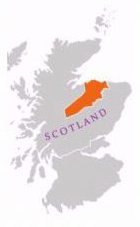
Speyside is generally accepted as a subdivision of the Highlands Region. Over half of all Scotland’s distilleries are located in Speyside. Speyside malts are typically the sweetest of all Scotch Whisky Malts and many of the most popular single malts are produced in Speyside.
The huge selection of Speyside malts offer a variety of strengths and can generally be broken down into two categories, the heavy, rich sherry flavoured malts and the more complex light floral flavoured malts. Speyside malts are essentially sweet whiskies, although some can have a little peaty character with just a slight hint of smoke.
The list of malts produced in this region of Scotland is extensive, but some of the better known names include Glenfiddich, The Macallan, Balvenie, Glenlivet, Glenfarclas, Glen Moray and Aberlour.
| Aberlour | Allt-A-Bhainne | Auchroisk |
| Aultmore | Ballindalloch | Balmenach |
| Balvenie | BenRiach | Benrinnes |
| Benromach | Braeval | Cairn |
| Cardhu | Cragganmore | Craigellachie |
| Dailuaine | Dalmunach | Dufftown |
| Dunphail | Glenallachie | Glenburgie |
| Glendullan | Glen Elgin | Glenfarclas |
| Glenfiddich | Glen Grant | Glen Keith |
| Glenlivet | Glenlossie | Glen Moray |
| Glenrothes | Glen Spey | Glentauchers |
| Inchgower | Kininvie | Knockando |
| Knockdu | Linkwood | Longmorn |
| Macallan | Mannochmore | Miltonduff |
| Mortlach | Roseisle | Speyburn |
| Speyside | Strathisla | Strathmill |
| Tamdhu | Tamnavulin | Tomintoul |
| Tormore | ||
| Banff (D) | Caperdonich (D) | Coleburn (C) |
| Convalmore (C) | Dallas Dhu (C) { now Museum} | Imperial (D) |
| Pittyvaich (D) | Towiemore (C) |
Lowland
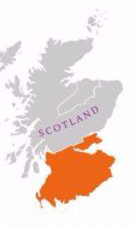
The Lowland region lies south of an imaginary line that runs from Greenock on the West coast of Scotland to Dundee in the East. Most of the Lowland malts produced in this region end up in blends, but there are a still a few single malts available to try from this region.
Malts from this region are light in colour and have quite a dry finish. The dryness comes from the malt itself, not from peat as Lowland malts tend to be produced with unpeated malt. You may also find a certain sweet fruitiness to the flavour. Lowland malts are regarded as an excellent aperitif.
Generally speaking, Lowland region whiskies are mellower than whiskies from the neighbouring Highlands, and are very much appreciated by those new to malt Whisky and experienced malt drinkers
| Aberargie | Ailsa Bay | Annandale |
| Auchentoshan | Bladnoch | Bonnington |
| Borders | Clydeside | Crafty |
| Daftmill | Eden Mill | Falkirk |
| Glasgow | Glenkinchie | Holyrood |
| Inchdairnie | Jackton | Kingsbarns |
| Leven | Lindores Abbey | Lochlea |
| Port of Leith | Rosebank | |
| Cameronbridge (Grain Whisky | Girvan (Grian Whisky) | North British (Grain Whisky) |
| Reivers (Grain Whisky) | Starlaw (Grain Whisky) | Strathclyde (Grain Whisky) |
| Adelphi [Glasgow] (D) | Auchtermuchty (C) | Auchtertool (C) |
| Finnieston (D) | Glenflagler | Inverleven (D) |
| Killyloch (D) | Kinclaith (D | Ladyburn (D) |
| Littlemill (D) | St. Magdalene (C) |
Campbeltown

Campbeltown lies towards the end of the Mull of Kintyre peninsula on the West Coast of Scotland and consists of a mixture of pasture, peat bogs.
Today there are only three distilleries producing whisky, but in days gone by there were over 30 distilleries here.
The Campbeltown single malts are very distinctive, tending to be full bodied, renowned for their depth of flavour and also for their slightly salty finish. With peat adding a hint of flavour similar to that found in an Islay malts.
| Glen Gyle | Glen Scotia | Springbank |
| Hazelburn (D) |
Islands (inc. Orkney & Shetland)
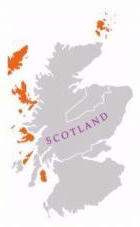
Like Speyside, the Islands are another subdivision of the Highlands Region. The Islands are a geographical region rather than a characteristic one. The Islands region includes all of the whisky producing Isles of Scotland namely Mull, Skye, Orkney, Arran, Jura and Lewis. The Isle of Islay is considered a region on its own.
Due to the location of the Islands distilleries their whiskies tend to have a coastal feel to them. They are slightly peatier in character than most highland malts but not to the extent of the peatiness that you will find in Islay malts. The peatiness is generally softer and sweeter than there stronger cousins from Islay.
| Abhain Dearg | Arran | Barra |
| Harris | Highland Park | Jura |
| Kimbland | Lagg | Raasay |
| Saxa Vord | Scapa | Talisker |
| Tobermory | Torabhaig | |
Islay
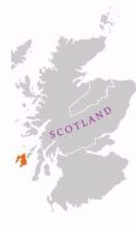
There were twelve distilleries on the island of Islay (pronounced Eye-la). Islay is located in the Inner Hebrides of Scotland. The island is often lashed by sea winds and rain, these elements certainly have a say in the whisky produced there. Islay’s surface is very flat and consists largely of peat, which has a huge influence on the flavour of the whiskies produced here.
Islay whiskies are the strongest flavoured of all Scotch whiskies and tend to be dry and peaty. They are renowned for their strong peaty smokiness which comes from the peat fuel which they use for malting the barley.
The character of Islay malt whiskies are very often described as being very smoky and medicinal, salty and sea weedy with a dry finish and sometimes with quite a bite.
The smoky flavour of Islay malts can be an acquired taste, but if you have a taste for smoky dry malt then Islay malts are the malts for you.
| Ardbeg | Ardnahoe | Bowmore |
| Bruichladdich | Bunnahabhain | Caol Ila |
| Kilchoman | Lagavulin | Laphroaig |
| Port Charlotte (C) | Port Ellen (C) |
 welcome to the art of whisky