The Fermentation Process
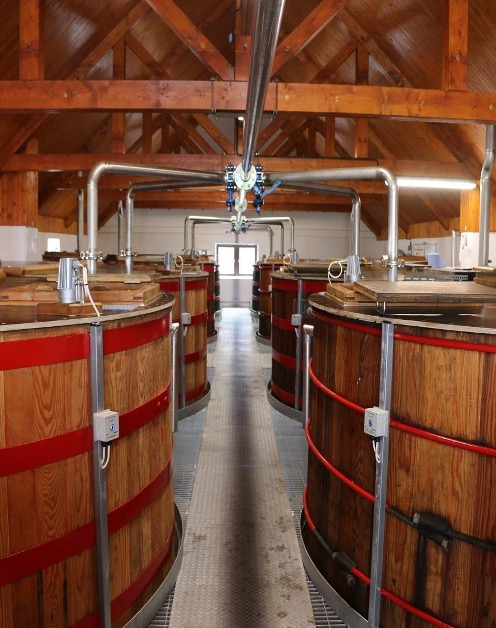
The wort is cooled and pumped into washbacks. It is in the washback that yeast is added and fermentation starts. The yeast converts the sugar in the wort into alcohol.
Yeast
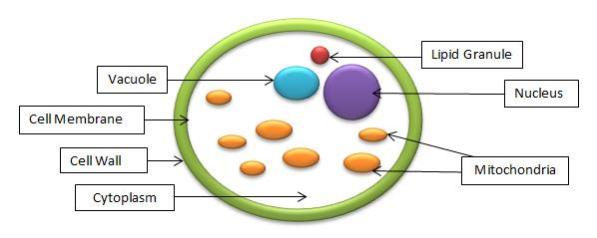
Yeast is a single-celled fungus with many species, but the one relevant to whisky production is Saccharomyces cerevisiae, of which there are many individual strains. Brewers Yeast or Distillers Yeast are the preferred strains.
A whisky distiller wants a yeast which doesn’t clump together and will cope with high sugar content, is temperature-tolerant, and can continue to work in a relatively high-alcohol environment. This means that all the sugar will be converted to alcohol and also that there are no lumps of yeast cells in the wash which might burn onto the steam coils in the still and produce acrid aromas. The chosen strain must also be able to convert sucrose, glucose, fructose, as well as maltose and also be able to
tolerate alcohol levels of 8-9% abv in single malt.
Yeast is added to the mash where sugars such as glucose, maltose and malt triose are present. The yeast through fermentation converts the into ethanol and carbon dioxide. In all cases, the yeast eats the sugar and produces alcohol, carbon dioxide and heat, but in this process flavours are created.
The yeast continues breaking down sugars and proteins to amino acids – the building blocks of flavours.
Eventually, the sugar is used up and the yeast dies. Distillers can hold onto the wash in the washback before sending it to the stills, as more flavours are being generated.
After two to four days, fermentation is complete, leaving a liquid called wash that is a little like a strong beer at 8 to 9% volume alcohol. The length of fermentation time has an important effect on the overall flavour of the spirit.
For example, a short fermentation time of around two days tends to produce a nutty, spicy, flavour. However, a longer fermentation time helps to create its light spirit, and is one of the factors in delivering a smoother tasting whisky as well as its fruity flavours.
After fermentation, the wash arrives in the still room, ready for distillation.
 welcome to the art of whisky